
Best Practices for Regulatory Compliance in Prop Trading

Regulatory compliance in prop trading ensures firms follow laws set by groups like the SEC, CFTC, and FINRA. Non-compliance can lead to heavy fines, loss of trading rights, or reputational damage. Here’s what you need to know to stay compliant:
- Registration: Prop firms must register with the appropriate regulatory bodies (e.g., FINRA, CFTC, NFA).
- Financial Standards: Firms must maintain minimum cash reserves and submit regular financial reports.
- AML & KYC: Anti-Money Laundering (AML) and Know Your Customer (KYC) processes are critical to prevent fraud.
- Risk Management: Firms should enforce strict trade limits, monitor losses, and ensure sufficient capital.
- Recordkeeping: All trades, communications, and financial transactions must be documented and stored securely.
Technology simplifies compliance by automating trade monitoring, generating reports, and issuing alerts for potential violations. Platforms like TradersYard integrate these tools, offering transparent rules, real-time monitoring, and educational resources to help traders and firms meet regulatory standards.
Neglecting compliance can result in severe consequences, including legal action and loss of credibility. By prioritizing clear processes, accurate recordkeeping, and ongoing training, traders and firms can safeguard their operations and build trust.
Key Rules for Prop Trading
U.S. Rule Groups Summary
In the U.S., many rule groups watch prop trading. Each group has a plan and set of rules.
The Securities and Exchange Commission (SEC) looks after stocks and bonds. The SEC makes sure firms follow the law when they buy and sell stocks or bonds. Financial Industry Regulatory Authority (FINRA) works with SEC; it keeps watch over broker groups. FINRA checks that each broker obeys all needed rules.
For trading things like futures, the Commodity Futures Trading Commission (CFTC) is in charge. CFTC makes rules for trading future deals and other hard money things. Also, the National Futures Association (NFA) helps control trading in futures and forex. NFA is a group that checks its own members and sets some rules.
Each group has its own set of rules, forms, and checks. The kind of trading a firm does will show which rule group is the main one to watch the firm.
Top Rules for Prop Traders
Firms must be registered and licensed. Every prop firm needs to sign up with FINRA if it is a broker. Firms that trade futures or hard money deals must also sign up with CFTC and NFA. This takes lots of forms and work from the firm, and must be kept up all the time.
Money rules are strict. Firms must have enough money set aside to run right. FINRA’s Rule 15c3-1 says firms must keep a set amount of cash at all times. SEC also tells firms to hold some cash and often file reports on their money.
Stop bad money actions and know clients. Prop firms have to run checks on people and watch deals to help stop crime. This is called Anti-Money Laundering (AML) and Know Your Customer (KYC). Firms must check IDs and look into client backgrounds.
Firms must use strong risk plans. Firms need real limits on trades, keep track of how much is lost, and make sure there is enough cash. Many times, computers do pre-trade checks, set alarms, and send word if rules get broken.
Firms must hold reports and records. This means every trade, deal, or money move should be written down and kept. These records show trades, risks, and scores. In some cases, firms must send info each day to rule groups.
Here’s a short list of rule groups and what each does:
Group that makes rulesMain goalBig rules to followSECStocks and bondsSign up as broker, keep cash, report each day, check risksFINRAWatch over brokersSign up, keep cash rulesCFTCTrades and swapsSet trade steps, keep track, follow swap rulesNFAFutures tradeMake plans to stop money crimes, check who buys, keep training
Here is your revised text, following the given rules:
Open Rules and Clear Reports
Along with getting set up and having enough money, trading firms have to follow strict rules about being open and clear.
Form reports matter a lot. Firms that run more than $100 million in some stocks must fill out Form 13F every three months. Those who guide money choices have to fill out Form ADV. Firms that buy over 5% of a public company’s shares must fill out Form 13G. All these forms have rules and must be sent on time.
Money reports must be given often. Firms send in money statements and show they are following rules to people in charge. They must share risk data, like Value at Risk (VaR) at a 95% safe level. Each day, they should write down what they own, what it is worth now, how much they owe, big risks from holding lots of one thing, and who they trade with.
Checks by others are key for following rules. Firms have to pick a person to handle rule checks and set up their own check group. These checks look at how well firms follow rules. They help find things that might go wrong, and show rule watchers that the firm cares about doing things right.
Also, clear fees really matter. Firms must tell traders about all fees, like test fees, sharing profits, and other costs. Being open about fees makes trust and fits the need for clear rules.
If a firm meets these open and clear rule needs, it will be seen as safe and able to run well. But not following these rules brings big trouble. It can mean large fines, losing their right to trade, going to court, and a bad name. If they do not follow, they might lose their job trading and people will watch them more closely.
Big Changes at My Funded Futures | Compliance, Oversight & What Traders Should Know
Easy List to Keep to Rules for Prop Trading
To keep your trading fair and right, you need to turn hard laws into things you do each day. Here is a simple list to help you keep up with rules.
Make Rules That Are Easy to See and Know
Set clear rules for trades. Write down when you can trade, how much you can buy or sell, and which things you can trade. Make these as clear and full as you can. These rules should fit what your group needs, but also keep you safe in all cases.
Have rules on checking money. Write steps to check who people are, watch for odd trades, and keep notes if you see things that look off. These checks get more key for groups that trade with their own money.
Make plans to keep risk low. Write what the max loss is, how big each trade can be, and how much you can borrow. For one, you could set a rule that says you risk just 2 out of 100 of your money each time. Write what will happen if you break a rule and who needs to know.
Show all costs in clear words. Write what each thing will cost, like fees for checks, how much you split cash you make, and any other price. Make it clear when you pay and how much. Hiding costs is a big red stop sign for rule keepers.
Groups like TradersYard show how key clear words and fast moves are for those who trade with their own cash:
"We focus on transparency and speed. No hidden rules, lightning-fast payouts under 4 hours, and the most sought-after feature - no trailing drawdown." - TradersYard
Clarify what you need to reach before you get paid. Write down clear rules for how much money you must make, how many times you can lose, and how many days you have to trade. Keep these rules the same for all people. Make sure rules are fair and help all who follow them.
Use Good Ways to Keep Records
Always keep records of your trades. Make notes of the time and date you trade, prices when you buy or sell, and why you made each trade. Use apps that write these notes for you. Make sure no one can change them after they are set.
Log all things done in your account. Take note of all sign-ins, rule changes, and updates to your account. Make a full list over time to show you are following the rules if someone asks.
Save every chat, call, and mail you get from your firm. Keep copies of all messages about account changes, cash paid out, or new rules. Use tools or apps that keep these messages for you, so you do not lose any.
Keep money notes neat and clear. Save bills for fees. Track how much profit you have, and keep all pay records. Watch every dollar that goes into or out of your account to spot mistakes or extra charges.
Write down what the checks looked for and what you can do better. Keep notes about your wins and fails to show you want to get better and follow the rules.
Strong records help you keep to the rules. They also help you train and do checks often.
Train Often; Check Rules
Give training every three months. Learn the rules made by top groups like the SEC, CFTC, and NFA. Know what these groups do and what they expect from traders.
Work on ways to lower risk. Practice how much you should buy or sell, how to not use too much borrowed cash, and how to avoid big losses. Learn to see when you are using too much risk and how to fix it. Write down when you train, what you learn, and what you should remember.
Know rules about money crime and how to know your client. Learn signs of bad acts like money washing. Even if these steps are not needed, they are useful and very common now.
Get good at keeping records. Know why notes are good. Learn how to keep them neat and easy to find. This helps a lot when you need to check your actions.
Spot deals or ads that do not tell the truth. Learn to see when a firm tries to fool you with big promises. Be careful about offers that seem too good.
Check your rules every three months. See if what you do works well. Make changes when rules or laws need them. Look at your own trading and see if you follow your rules all the time. Fix problems fast if you see any.
Write down your training. Note the day, what you learned, and what you got out of it. This will show you care about doing things right.
Have outside people look at your checks once a year. They can see things you missed and tell you how to do better.
sbb-itb-1dce033
How Tech Helps You Follow Rules
Tech today helps people and firms follow rules. It makes hard jobs easy. Tech can do work for you, check trades all the time, and find problems fast. Tools for rules have smart ways to check before trades, watch trades, and give fast alerts. These tools help people stay safe and follow the law.
Main Things These Tools Do
- Checks Before Trade:
These checks stop trades if they break limits. They block trades that should not go through. This stops rule-breaking before it starts. - Watch Trades All the Time:
When you use real-time checks, you get quick warnings. If you are close to a limit, you will know right away. You can change things fast and stay inside the rules. - Fast Alerts:
If a trade breaks a rule, a quick alert shows up. The right people know right away. They can look into it and fix the issue fast. - Catch Bad Trading:
Smart math looks at trade moves and spots odd actions, like secret trades or pushing the market in unfair ways. - Keep Records on its Own:
These tools write down each trade and all changes as they happen. Nothing gets missed. No need to write it down yourself, so fewer mistakes get made. Now you are ready for any check from rule keepers. - Make Reports You Need:
Reports change to fit what rules ask for. You get right reports, on time, for all rule needs.
Why Tech Is Good for Keeping Rules
- Less Mistakes:
Doing rule work with tech means fewer slip-ups. Records stay true and there are fewer breaks of the rules. - Work Gets Done Fast:
Jobs that used to take a long time can be done very quick now. You answer rule questions fast and keep trading with no stop. - See Trades Live:
You can see what is going on right now. You spot issues as soon as they pop up, not later. - More Time for Tough Work:
Since tech does simple tasks, people can spend time on harder jobs. They can think of better plans and look at bigger risks. - See-Through for All:
All trades and changes are written down as they happen. It is easy to show you followed rules. Audits are quick and trust is built with rule watchers.
How TradersYard Supports Regulatory Compliance
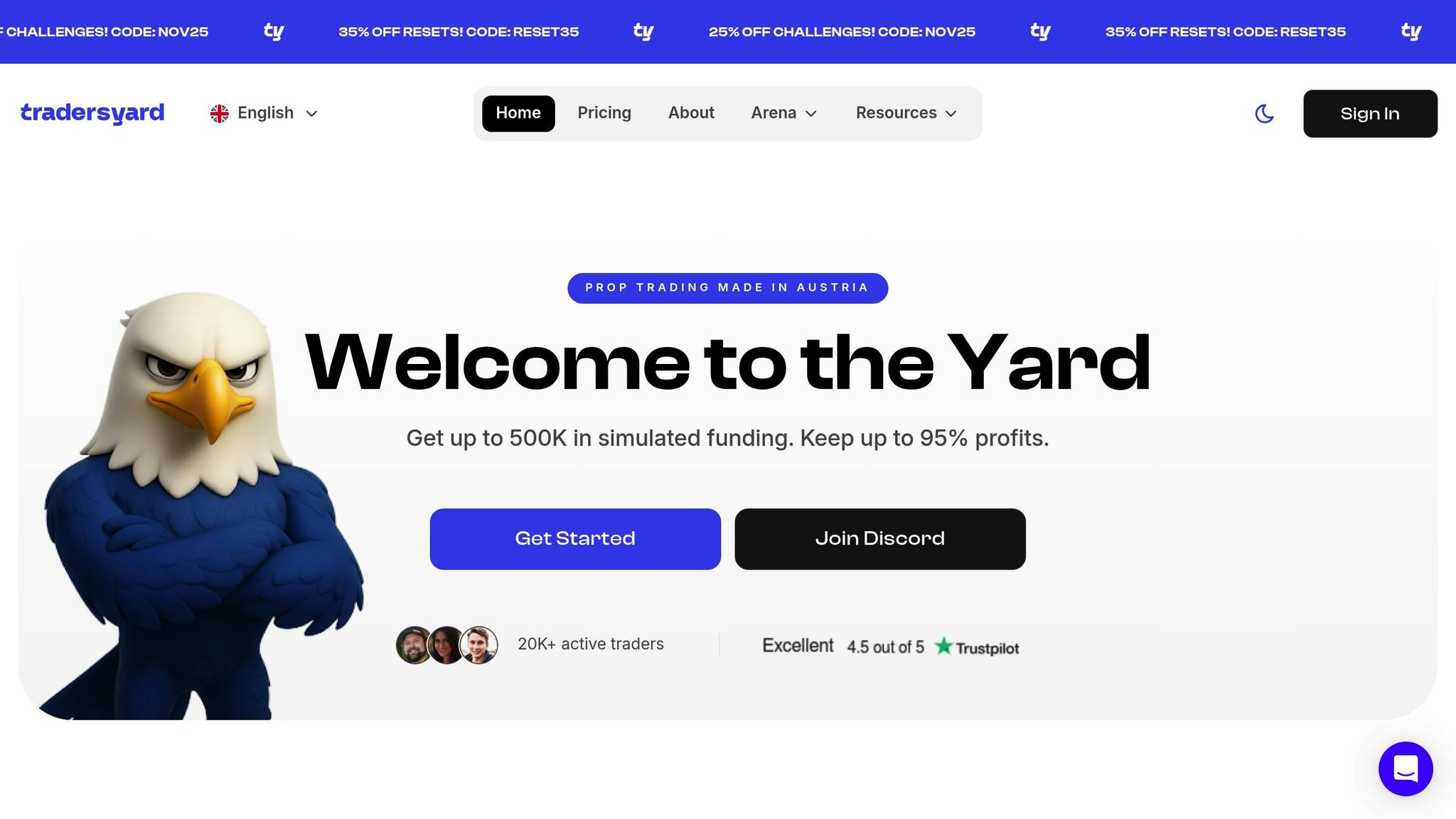
TradersYard demonstrates how integrated technology can simplify and enhance regulatory compliance for traders. By embedding regulatory standards into its platform, it helps users adhere to rules and manage risk efficiently. With features like automated recordkeeping and compliance-focused tools, TradersYard ensures that traders can focus on their strategies without worrying about regulatory pitfalls.
Structured Evaluation and Clear Rules
TradersYard uses a two-step evaluation and verification process to grant skilled and risk-conscious traders access to funding of up to $500,000. The platform provides clear, transparent trading rules to guide users. For example, traders must adhere to daily loss limits of 5%, maximum drawdown limits of 10%, and leverage capped at 1:30 across all accounts. These straightforward guidelines help traders maintain responsible risk management.
"We focus on transparency and speed. No hidden fees, lightning-fast payouts under 4 hours, and no trailing drawdown.", TradersYard
The platform employs a static drawdown system, which keeps risk parameters fixed. Unlike trailing drawdowns, these limits remain constant regardless of trading activity, making it easier for traders to track and document their performance while maintaining compliance.
Account Monitoring and Reporting
TradersYard ensures real-time monitoring of all trading activity. Every trade, profit, and loss is automatically recorded, creating detailed audit trails for both internal reviews and regulatory needs. The platform also manages profit splits, offering payouts of up to 95%, while documenting all financial transactions. Additionally, changes to accounts are meticulously tracked, ensuring every detail is logged. The static drawdown system further simplifies recordkeeping by maintaining consistent risk parameters.
"Their clear rules and no hidden fees made it easy to focus on growing my account.", Dominic Mang, Austria
Educational Resources and Community Support
TradersYard goes beyond technical tools by emphasizing education and community engagement to support compliance. It offers resources on regulatory best practices and risk management, helping traders understand the rationale behind the rules they follow. The platform’s active Discord community serves as a hub for insights, updates, and discussions on topics like prop firm strategies and compliance tips, fostering a collaborative and informed environment.
"I found the response from the Support Team to be top notch and everyone was very sincere.", Arefin Islam, United Kingdom
The support team is readily available to address complex compliance questions, providing traders with the clarity and guidance they need. This focus on education and community involvement not only reduces compliance risks but also cultivates a safer and more supportive trading experience for all users.
Conclusion
Regulatory compliance is the backbone of success in proprietary trading. As the trading landscape evolves, those who prioritize compliance not only safeguard their capital and reputation but also set themselves up for sustained growth. The consequences of ignoring compliance are steep - ranging from hefty fines and revoked trading privileges to potential business closure and forfeited profits. In modern prop trading, compliance is the glue that holds together efficiency and credibility.
Thanks to advancements in technology, compliance has shifted from being a tedious manual task to an integral and seamless part of daily operations. Automated tools and platforms, like TradersYard, demonstrate how clear processes and transparent rules can streamline compliance while boosting overall trading performance.
Industry leaders consistently highlight that compliance is more than just a legal necessity - it’s a strategic advantage. It fosters trust, ensures stability in trading relationships, and helps firms adapt to regulatory changes. Prioritizing compliance not only attracts serious traders but also ensures operational continuity. Conversely, firms that neglect these practices risk increased scrutiny and exclusion from the market as the industry becomes more regulated.
For traders looking to build or advance their careers in proprietary trading, the takeaway is simple: treat compliance as a cornerstone of operational integrity and long-term success. Combining disciplined risk management, transparent processes, and technology-driven compliance tools creates a strong foundation that can weather market fluctuations and regulatory shifts.
FAQs
What happens if a proprietary trading firm doesn’t comply with regulatory requirements? +
Failure to meet regulatory standards can result in serious repercussions for proprietary trading firms. These consequences might range from substantial fines and temporary suspension of trading activities to, in severe cases, the complete revocation of licenses. Beyond these penalties, regulatory violations can lead to increased oversight or mandatory audits, which not only drain resources but can also tarnish a firm's reputation.
To steer clear of these challenges, firms need to place compliance at the forefront. This means using effective risk management tools and maintaining transparent operational practices. Platforms like TradersYard, which offer structured evaluation processes and well-defined rules, enable traders to stay within regulatory boundaries while keeping their focus on achieving their trading objectives.
How can proprietary trading firms use technology to stay compliant with regulatory requirements? +
Technology has become a key ally for proprietary trading firms in navigating regulatory requirements. With advanced risk management tools, firms can keep a close eye on trading activities in real time. These tools help ensure that trades stay within set limits and flag potential compliance issues early - before they turn into larger problems.
Another helpful innovation is automated reporting systems. These systems simplify the often tedious process of preparing and submitting regulatory filings. By automating these tasks, firms can reduce the chance of errors and save valuable time. Platforms like TradersYard also bring added value by offering structured evaluation processes and clear, transparent rules. This creates a supportive environment that balances compliance with trading success.
By embracing these technologies, firms can stay focused on meeting regulatory demands while maintaining efficiency and profitability. It’s a win-win for compliance and business performance.
What financial and risk management practices should proprietary trading firms follow to ensure regulatory compliance? +
Proprietary trading firms need to prioritize strong financial and risk management practices to stay compliant with regulations. This involves using advanced tools to monitor and control risk exposure, maintaining accurate records of all trades, and strictly adhering to anti-money laundering (AML) and know-your-customer (KYC) requirements.
It's also crucial for firms to set clear trading guidelines, conduct regular audits of their operations, and ensure traders are well-trained in compliance protocols. Platforms like TradersYard can be a valuable resource, offering structured evaluation systems, transparent rules, and tools designed to promote disciplined and compliant trading.